Blog
The exhibition Quello che non c’è tells the story of five different projects and the solutions found to overcome the challenges encountered during their creation.
The models initially made by OFB were closely tied to the knowledge and machinery available at the time: sheet metal could be cut, welded and bent without difficulty, but the only curves that could be made were those produced with a rolling machine, which bends the sheet metal by pressing it between two rollers. Creating spheres and hemispheres was not possible.
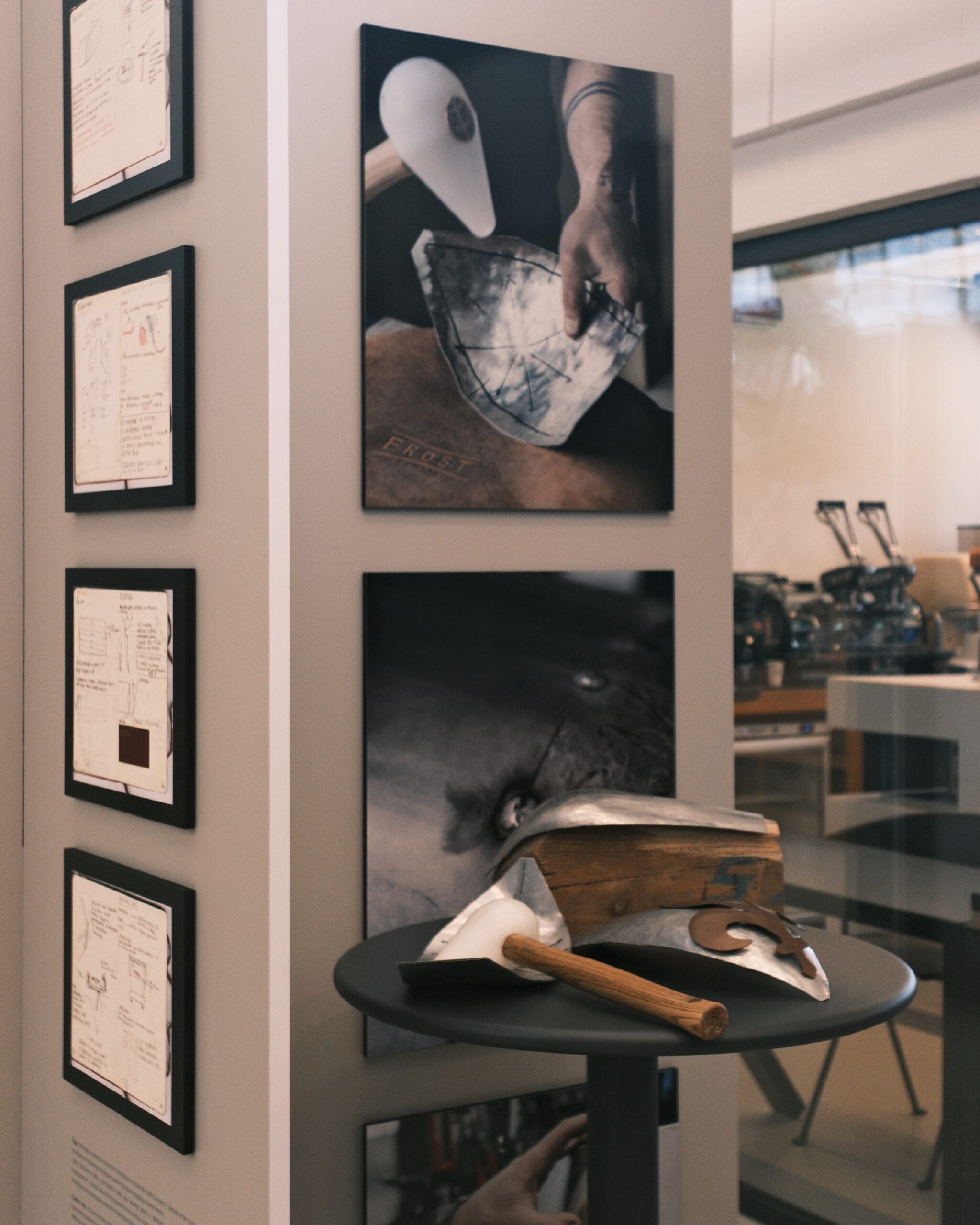
The sinuous shapes of the last machines designed by Bruno Bambi in the 1990s remained an unreachable goal until master metal beaters were found to work alongside. Watching them work provided a valuable starting point: understanding which tools were needed, learning the basic techniques, revisiting existing knowledge and carrying out further research.
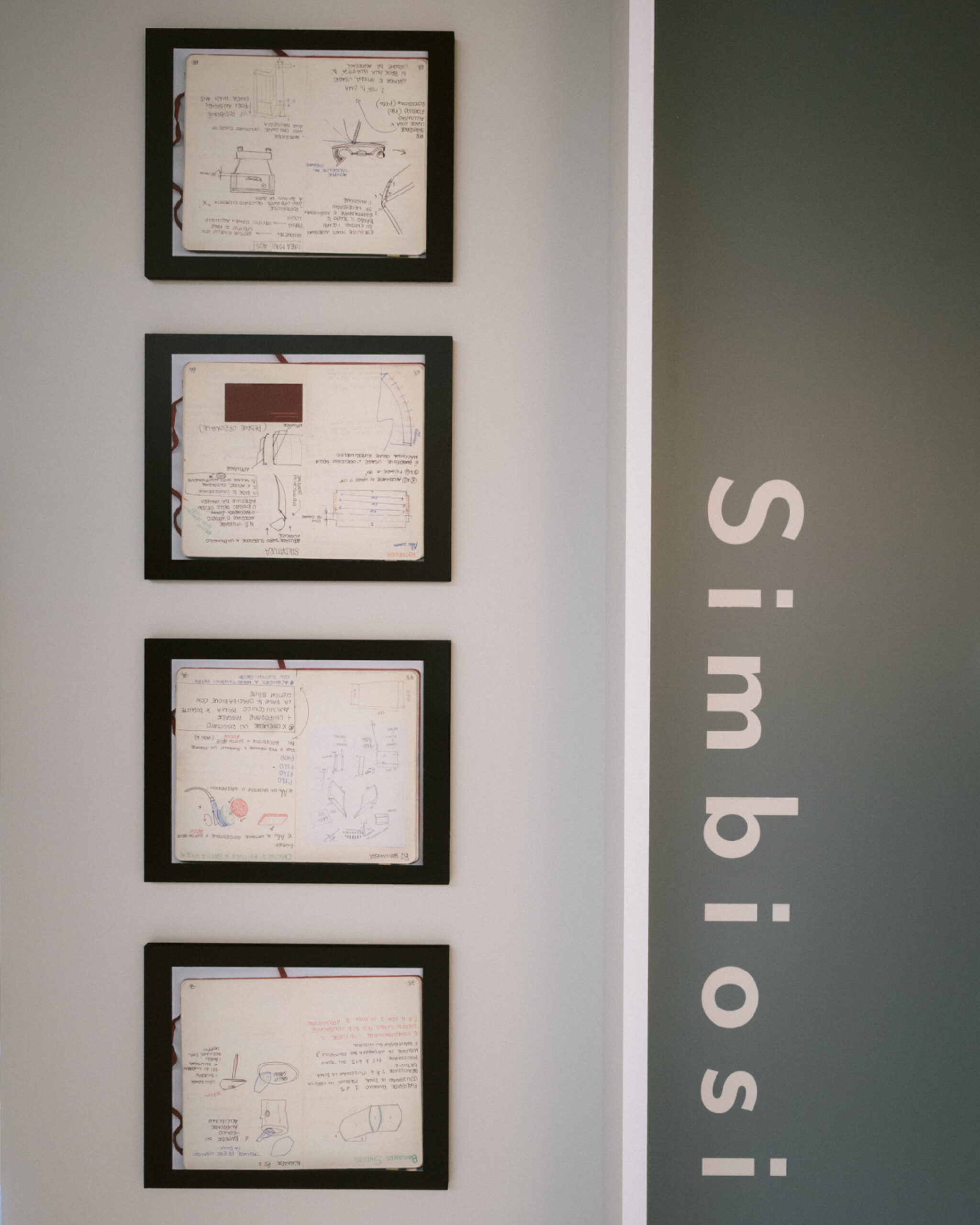
Once the right process for creating a conical corner had been learned, and with a new set of shears, hammers, a sandbag and stakes for shaping the metal, experimentation began. This is how the Simbiosi model came to life, inspired by the brass machine created by Bruno Bambi. It was the first aluminium machine made entirely by hand using metal beating techniques.
As was the case in the old workshops, some of the tools used are also made in-house. They are the result of ingenuity and curiosity: buying old manuals from the last century, looking through catalogues and even taking ideas from videos found online, all in the search for solutions.
To create the concavity of the edge, hammering the metal on the sandbag was not enough. With each strike, the sand shifts slightly, allowing the material to deform. But something was needed to create much greater depth without putting too much tension on the material, or risking puncturing or tearing it.
The solution was to hollow out a wooden log with a chainsaw, creating a first deformation in the sheet metal. The English wheel, hammers and stakes could then be used to create the section that closes the corner of the Simbiosi, onto which the brass lilies are applied.
These kinds of solutions are typical of artisans, who often have to solve problems quickly by relying on whatever is at hand, or by building the right tool for a specific process. In the workshop, a shrinker was used — a modern, toothed tool that bends the sheet metal and releases tension, creating a curve — to recreate the effect of some hard-to-find twisted pliers once used by an old craftsman to grip the sheet metal and twist it, almost as if he were picking up spaghetti with a fork.