Chapter 2
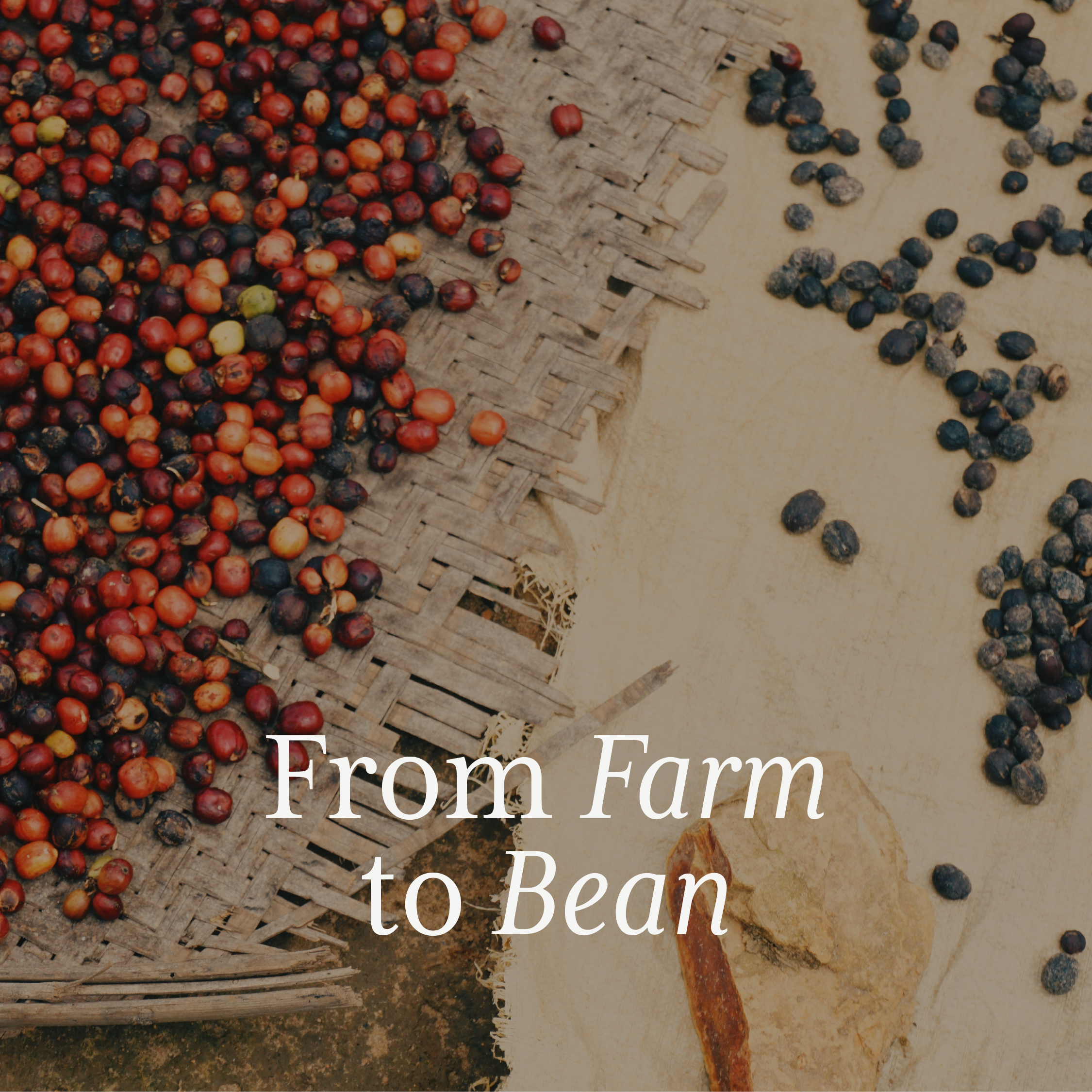
From Farm to Bean, the journey from harvest to roast.
Once variety sets the coffee’s genetic identity, the journey has just begun. What happens next, on the farm and at the roastery, shapes the final cup as much as the plant itself.
Coffee grows within a narrow climatic window, and that window is shifting. Rising temperatures, inconsistent rainfall, and the spread of pests and disease are pushing farmers to higher altitudes, shortening harvest windows, and making yields harder to predict year over year. Climate change is no longer a distant concern for the coffee industry; it is already redrawing the map of where coffee can be grown at all.
Once cherries are picked, processing determines how the coffee cherry’s sugars, acids, and mucilage interact with the seed before it becomes green coffee. Washed, natural, and honey processes each pull the cup in a different direction, from clean and bright to fruit-forward and heavy-bodied, and the choice made at origin is one of the single biggest levers on final flavor.
Started as experimental and slowly becoming essential, anaerobic processing is reshaping what we thought coffee could taste like. By fermenting cherries or parchment in sealed, oxygen-free environments with controlled variables, producers can design entirely new flavor profiles- tropical, boozy, intensely sweet- turning processing itself into a craft as deliberate as roasting.
Roasting itself is where green coffee finally becomes what we recognize as coffee. Through the roaster’s decisions, coffee beans can achieve wildly different expressions from the same lot: one roast curve preserving brightness and delicate florals, another pushing toward body and sweetness, another sacrificing origin characteristics in favor of darker, roast-driven flavors. Roasting is not merely a finishing touch. It is the final act of interpretation.
In this second Coffee Facts chapter, we look at how climate change is reshaping origin, how processing and anaerobic fermentation define flavor before the bean ever reaches a roaster, and how roast style makes the final decision on what ends up in the cup.
Next chapter: Brewing Better Espresso, how tamping, extraction speed, and technique turn a well-roasted bean into a great espresso shot.