Blog
A Coffee with Stefano Chiari
Quality Manager at La Marzocco
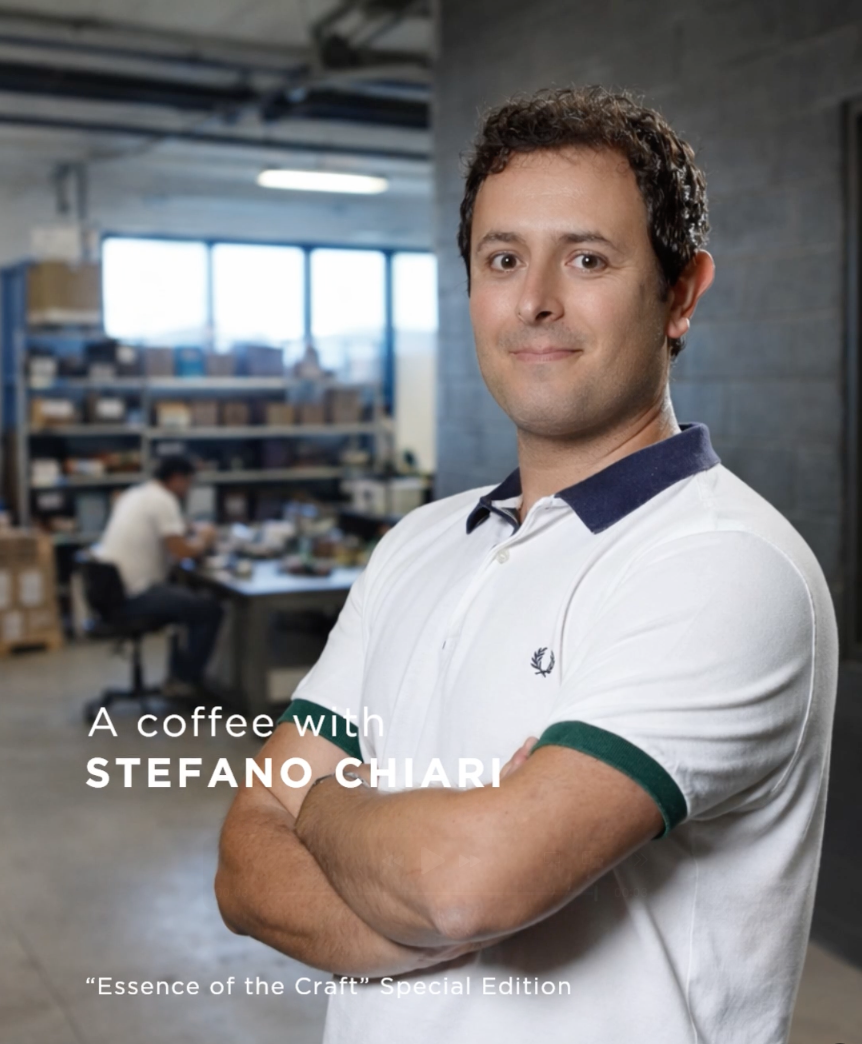
I joined La Marzocco in June 2017. They were looking for a mechanical engineer. In my previous experience, I worked in both research and development and quality control. At that time, the quality control team was still very small compared to today, and there was a management engineer but no mechanical engineer, so they gave me the opportunity to choose which position to join. I chose quality control because I felt I could contribute more to the company.
They were about to launch the Leva, and shortly after, the KB90 would be released. With such complex projects, quality control had to keep up with the Research and Development department. Just think of the Straight-In technology, not to mention the grinders we produce today, which require extreme precision and very specific expertise. Over the years, we structured a significant expansion.
We equipped ourselves with instruments that we didn’t have before. The first step was to have a larger space, and with new instruments, we were able to structure and increase inspections. Today, we perform internal inspections that initially required external consultants and laboratories. We now have more people on the team, trained and qualified, and a climate-controlled environment that meets all requirements for extremely high-precision work. Over time, procedures and specifications were created to establish measurable indicators and set guidelines.
One of the key successes was collaboration with suppliers, who are required to conduct strict inspections in accordance with our procedures. We worked to extend our control system into the supply chain because while incoming inspections can be implemented, the real way to reduce component non-conformities is to improve quality at the supplier level. It is complex work that requires collaboration and must be done together, with suppliers sharing control plans to provide evidence of how materials are inspected before arriving at the factory, especially for components we consider critical. Despite this, we still maintain incoming inspection procedures to ensure no issues reach the production line.
Moving from 20,000 to 60,000 machines per year also required changes in production. Production lines were introduced, and assembly procedures became more standardized, so we adapted our quality control procedures to this new method to keep all KPIs under control and maintain the same quality standards.
Internally, we created operators who work alongside production lines to manage problems in real time. Time is a determining factor: if a rejected part is reviewed a month later, the risk is that during that month, machines may have been shipped with the same defective parts installed. It is also important to manage internal defects. A component can be damaged if it falls or gets scratched during assembly. Accidents can happen, but these damages could also result from inadequate tools or procedures.
Recognizing these details immediately allows us to correct procedures, provide the right tools, and eliminate the problem.
We created precise specifications for every component, defining exact standards for suppliers. Mechanical components are measured to strict tolerances, and technical or chemical properties are defined by objective parameters. However, considerable effort was put into making aesthetic criteria measurable, despite their subjective nature.
Since La Marzocco’s main goal is to produce high-end machines, obsessive attention to detail is essential.
To make aesthetic evaluation measurable and manageable, we worked to make acceptance criteria objective. Together with the Research and Development team, we defined parameters that establish our standards. Machine components were divided into categories from highest to lowest criticality, and we worked on classification to produce increasingly objective documents. Aesthetics is the area where we had to work the most, but these specifications apply to all product categories and regulate the quality of steel, materials in contact with food, hydraulic system components, and electrical and electronic components.
In addition to our upstream work, we track machine performance after leaving the factory. Feedback from our after-sales department helps our technical team improve products already in production and informs Research and Development in creating better machines. Involving these teams during the design phase helps eliminate critical issues before production begins. This approach adds significant value and should be expanded further. Machine connectivity is essential to achieving this goal.
So, we work side by side and in synergy with all departments.
These ten years have been challenging, not only because of our growth with increasingly complex products and a larger company population, but also because of events in the world around us.
The biggest challenge for me so far was during the pandemic and the period immediately after. The world basically stopped. Meanwhile, we were growing and growing a lot.
We found ourselves producing in a completely different factory setup to limit contact between departments. We switched to a new factory setup to limit contact between departments, while working in protective gear such as masks and shields. Our department connected all others. Supplies were scarce, and some materials became unavailable. Certain electronic components were either impossible to find or prohibitively expensive due to global demand. We had to find new suppliers and assume responsibility as our products expanded worldwide, putting the company’s reputation at significant risk. Manufacturers shut down furnaces and stopped production. When they restarted, only low-quality polished steel was available. It had defects we had never seen before: scratches, streaks, peeling. This required even more careful inspection at our sheet metal suppliers.
These challenges demanded intense focus and adaptation, but they also accelerated our growth and knowledge. We improved processes and are committed to continuously pursuing higher quality, aiming for zero defects even if perfection itself remains out of reach.