Blog
My name is Laura Roshanian. I am co-owner of the CTS Group. If we are in the coffee industry today, it is because of a visit to the La Marzocco factory that we made, I believe, in 2013 or perhaps earlier. At that time, we had a shop in Iași, where we sold roasted coffee, spices, and things of that kind. We were not selling equipment, but we decided to visit La Marzocco to enjoy the trip and have the experience. The trip was wonderful, but the incredible thing is that La Marzocco changed our lives.
We met people who were truly passionate — every single one of them. I had the pleasure and the honor of meeting Piero Bambi. We spent the whole time on the terrace, laughing and listening to him tell the story of La Marzocco.
It was beautiful to spend so much time talking with Piero, and also to see the whole team working together. They were all so proud of what they were doing, and so passionate. We fell in love with the spirit we felt at La Marzocco.
We did not know much about equipment, and at that time in Romania, espresso machines were given to cafés for free, so the idea of selling them was unheard of. And yet we said to ourselves: “This is exactly what the industry needs.” From there, we began to deepen our knowledge of coffee, especially specialty coffee.
We opened a larger shop, with a café inside, where we installed the first La Marzocco machine: in a shopping center that was brand new at the time, Palace Iași. That is where we started. To promote the machines we had fallen in love with for their craftsmanship and reliability, we invited baristas to work with La Marzocco in our café.
From there, a network simply began to grow. We learned the technical side and opened a technical department to service the machines we sold. Then we realized that we needed a spare parts warehouse so cafés would not have to stop operating. Over the years, we have deepened and explored the entire specialty coffee sector, while always keeping people at the center.
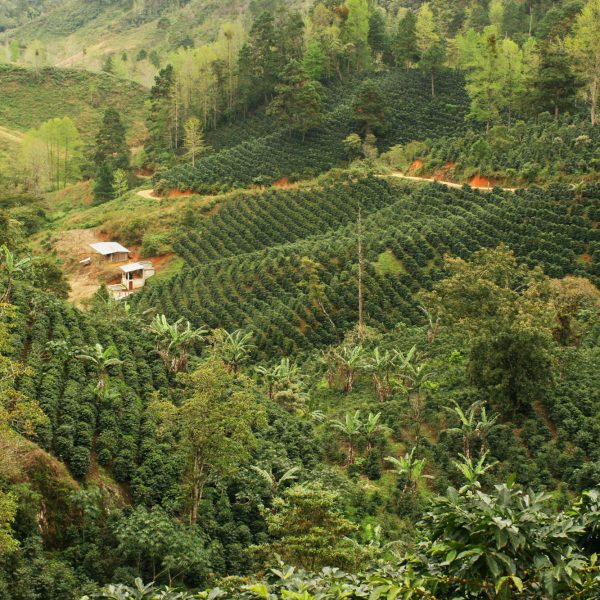
Today, for example, we have a department dedicated to green coffee. We import directly from farmers, but we also try to connect people with origin. We involve producers so they can see where their products end up and understand the expectations of those who consume them. We connect roasters with baristas and farmers so that they can understand one another and, of course, with consumers, who can ask anyone any question in person. A direct conversation is created, generating an atmosphere in which diverse perspectives interact.
Artisan HUB — Human United in Business — was born from the same principle. The specialty coffee world is still fairly young, so we thought we needed to learn from more mature sectors, which have established systems. By mixing with them and sharing the same spaces, we would learn faster. So last year we launched Artisan HUB, an experiential space where several educational initiatives also come to life. For example, “Girls Just Wanna Do Business” is dedicated to women in the business world, offering the opportunity to learn from other people’s experiences.
The coffee sector in Romania has changed a great deal. I remember that at home we drank coffee from the time we were children. Of course, it was not espresso — it was a kind of filter coffee. And most of the time it was “Nechezol”, a blend of different types of coffee with other grains, because coffee was too expensive.
Then, when we opened the shop where we sold real coffee, our first customers were elderly people who remembered how good coffee had been after the war. So at first we asked ourselves what we were doing, and whether we were really sure this was the right business. But during that time, we truly learned a great deal about coffee quality and about the connections that coffee can create between people.
I believe the transformation of the coffee scene in Romania also happened thanks to Romanians’ desire to succeed and to be good at what they do. This competitive spirit has helped us in recent years to have many champions in the sector: world champions and vice champions in coffee roasting, Coffee in Good Spirits and ibrik coffee. This has driven the strong development of the industry in the country and has also led to very high standards. Because our champions are examples for baristas.
We also host many workshops with our friends from the industry, who often come to visit us from abroad. We learn from them, and they have helped us. This industry is made of connections. That is why we created Human United in Business.
The CTF Group, which also includes Artisan Coffee Gear, dedicated to equipment, and Artisan HUB, interact and collaborate — it is a dialogue. Human United in Business is the concrete expression of a quote I love, according to which economic life is an arena in which the qualities of the spirit are expressed, such as honesty, integrity, reliability, and generosity.
We often forget that we are human beings, and we treat one another as economic units. We ask ourselves: “How much can I gain from this conversation?” Everything becomes interest and transaction. What we are committed to and what we are developing is the human being within us — humanity.
With this quote in mind, it was easy to reach the conclusion that the industry needed a space dedicated to the growth and development of these human qualities. Because we cannot look at one another only from an economic point of view. We can grow much more when we are united and learn from one another, rather than remaining individual units.
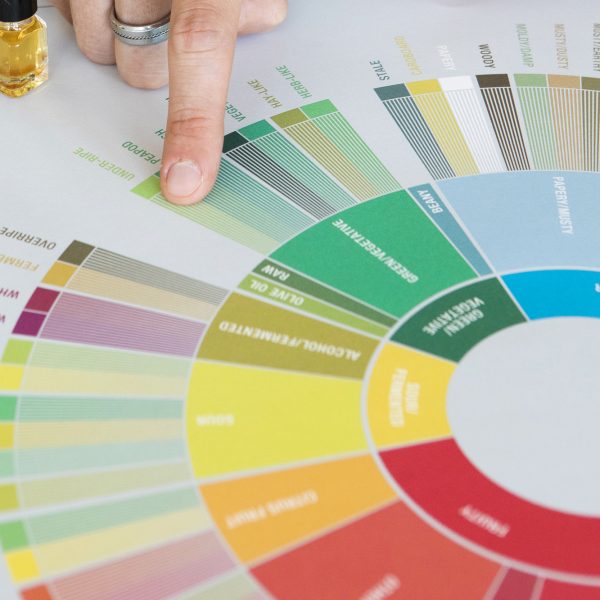
And then we tried not to be rigid in our approach. We can create a better program by talking to different people and asking them how they would use our spaces. We have different areas: a laboratory where you can taste coffee and roast samples; a huge room with every kind of equipment. In short, it is a bit like a playground. You can try anything. You can do whatever you want: even come in, make yourself a coffee, and leave. Or you can sit down to answer an email; you can have a chat with people from the different departments present in the space, such as sales or the Green Bean Tech department.
We also have a podcast room. If you have something to say, you can use this space and make it your own. We wanted to provide tools so that people would not be held back by a lack of materials or equipment. If they have an idea, they can come here and put it into practice.
We decided not to limit ourselves to the coffee world, but to leave this space open to anyone who wanted to make use of it. Once, the Romanian Football Federation came as a guest to present a workshop on innovation together with our partners. They chose our space because the space itself is innovative and inspiring. And, of course, we organised a coffee workshop for the football players and talked about coffee because, in everything we do, coffee is obviously included.
Or we hosted the World Ceremony Awards for the best chocolate. We let people bring us their idea, and together we see how to put it into practice. So yes, we are simply exploring everything that comes our way, with an open mind.
In this way, we can be involved in and inspired by things that we might otherwise never have encountered. We try to support entrepreneurship, and female entrepreneurship in particular. At the origin of coffee, there is a great deal of women’s work. In our own way, at the end of the supply chain, we bring attention back to women in business.
We started simply because we wanted to give a little more meaning to an event for 8 March; we wanted to offer free consultancy. Instead, it turned into a very well-organized workshop, which is growing more and more in visibility and necessity.
We had taken it for granted that there was no need to talk about gender equality. Instead, women themselves came to tell us that things were not okay at all, because workplaces are structured with very rigid rules that do not take into account the needs connected to maternity leave or the needs people have when they have young children. That is how things are, and it all works to men’s advantage.
And then there is the weight given to the same things depending on whether they are said by a man or by a woman. When a man says something, somehow his statements are considered more relevant. I think this happens only because we are still not far enough removed from a time when women were only in the kitchen taking care of children. That is a very valuable role, but today, when you see someone on the front line, speaking and leading the way in the industry, you also have to recognise that. This gap will not disappear simply because women want it to.
Men must want this equality just as much as women do, because both will become stronger by standing side by side. But it is a long process.
We have all these initiatives, which require a great deal of proactivity and energy, but everything happens around coffee — as if coffee, within the HUB, were a social platform where all these other things can happen, if you want them to.
It is about education, people and action. At a certain point, we also created a non-profit association, the Artisan Coffee Community, to develop the skills of the sector. Because we had developed as cafés and roasteries, but there was no legislative regulation. Everyone used their own way of hiring a barista or a roaster because the qualifications did not exist.
In recent years, we have managed to include the first six professions in the sector in the national register of professions, such as barista, expert roaster, green coffee import manager and Q Grader. For me, it was surprising that out of ten proposals, six were already accepted by the Ministry of Labor.
It may seem like a small thing, but there are so many funds that can be accessed so that these people can be trained or professionally reskilled. Being a barista is a great job for a young person. And in Romania, I asked for this job to be accessible from the age of 15, because that is the age at which many young people leave school. So it was very important that they had the opportunity to find a well-paid job in which they could grow.
Coffee is a matter of chemistry, of physics. But also of language and hospitality. If you are a good barista, you will become a successful person.
All our initiatives are centered on people before business. We are built on a platform of aggregation, growth and exchange. Because growth does not mean growing alone, but helping a community grow. In this period, when ego often prevails over a sense of community, building a space that offers people any kind of growth is truly special.